What to Sell Online: The First Decision Parents Must Make Before Starting an Online Business
Starting an online business as a parent feels overwhelming amid endless options.
Many parents get stuck here not out of laziness, inability, or lack of ideas, but because making too many decisions at once can feel overwhelming. Juggling family responsibilities, work, school runs, meals, appointments, laundry, bills, and the emotional workload of parenting can make building a business seem like another mountain to climb. However, starting your business doesn’t have to be this daunting.
The first decision isn’t about which platform to use. Those details come later. Instead, start with the most important question: what can you sell online that fits your life, uses your skills, and solves a problem someone actually wants solved?
Join us on this journey of discovery. Continue reading the blog to uncover practical steps and choose the path that best fits you. Take your first step towards building your own online business today.
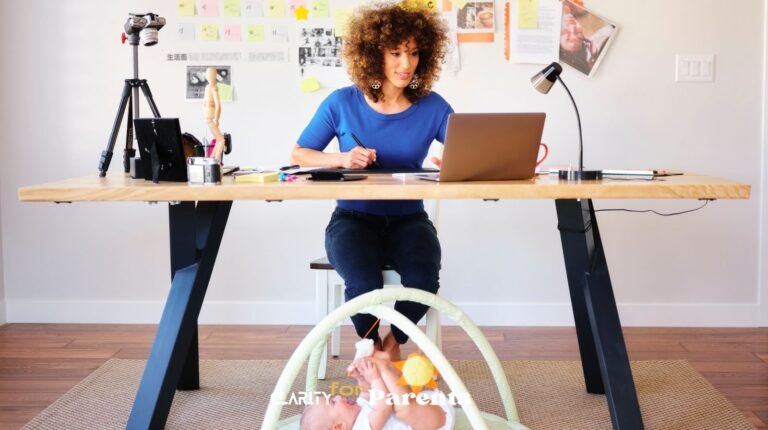
You Do Not Need the Perfect Idea. You Need a Clear First Step.
Many parents delay starting because they believe they need the perfect idea before taking action. They picture a “real”business as one that starts with a polished brand, professional photos, a finished website, legal pages, a fullproduct range, an email list, and a perfect content plan. While these might become useful over time, most online businesses start elsewhere.
A better starting point is to choose one simple idea and test it before overcomplicating things. (Hayes, 2026) The U.S. Small Business Administration notes that market research helps business owners find customers and understand what differentiates their business—a line of thinking parents need before investing time, money, or emotion in an idea. (Small Business Administration)
This does not mean you need to write a long business plan before you begin. It means you should look for small signs that your idea is useful. Are people already asking for help with this? Do you see others paying for similar support? Can you describe the problem clearly? Could you create a simple first version in a few hours rather than a few months?
For a parent, a clear first step is more powerful. You don’t need a long business plan to get started. Instead, look for small signs your idea is useful: Are people already asking for help with this? Do you see others paying for similar support? Can you describe the problem clearly? Could you create a simple first version in a few hours rather than a few months? These small checks keep progress manageable. Choosing a product, platform, or business model helps to slow down and examine the problem you want to solve. People rarely buy something simply because it exists. They buy because it makes part of their life easier, clearer, faster, calmer or more manageable.
This is especially important when you are starting an online business as a parent, because you probably do not have endless time to experiment with vague ideas. A strong offer usually begins with a specific problem that a specific person already cares about. (Rimalovski, 2025) That problem does not have to be dramatic. It might be the daily stress of planning meals, the frustration of managing a family budget, the overwhelm of preparing for exams, the pressure of writing a CV, or the mental load of staying organised.
This is where simple online business ideas can become genuinely useful. A meal-planning printable can help someone reduce the daily decision-making about food. A proofreading service can help someone feel more confident before sending an important application, document or website page. A tutoring session can help a student feel more prepared and less lost. A family budget spreadsheet can help someone understand where their money is going and make better choices.
When you start with the problem, your offer becomes easier to explain and easier for someone else to understand. Instead of saying, “I want to sell something online,” you can begin to say, “I help this type of person solve this specific problem with this simple solution.” That is often where a real online business starts: not with a perfect idea, but with a useful answer to a problem someone already has.

The Easiest Things Parents Can Sell Online Without Spending Much Money
With limited time and budget, the easiest online businesses use your existing skills, knowledge, or experience. That’s why services and simple digital products are often easier, cheaper, and less stressful to launch than complex physical products.
A service-based offer is often quickest—sell your skills or support without making a product first. For example, organised parents can offer virtual assistant services; those with writing or admin backgrounds can offer proofreading, CV editing, email support, or customer service. Former teachers or confident subject specialists can tutor or help with revision. Skills in Canva, spreadsheets, or basic website design can be packaged as simple services.
Digital products work because you create them once and sell repeatedly. Etsy’s Seller Handbook lists digital downloads like art, patterns, templates, and files. For parents, this means planners, meal kits, routine charts, budgeting tools, planning checklists, organisation workbooks, timetables, Canva templates, or short guides based on your knowledge.
The strongest ideas are often the ones that clearly solve a real, specific problem. For example, a parent managing meals on a tight budget could offer a meal planner, someone moving with kids could create a moving checklist, and a parent with exam experience could sell a revision pack. These realistic starting points draw from lived experience and real needs.
Physical products can work, especially if you enjoy making or packaging items, but they often require more effort—stock, postage, storage, returns, costs, and delivery times can be challenging. This does not make physical products wrong, but if your family life is busy, try services or digital products first. Start digital; move to physical products with time.
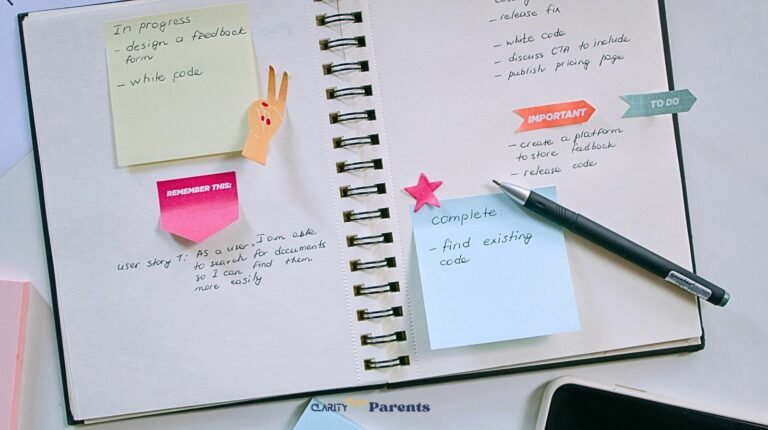
How to Choose an Online Business Idea That Fits Your Real Life
The right idea is not only about what people might buy. It is also about what you can realistically deliver. This is where parents need to be honest with themselves, not in a discouraging way, but in a protective way.
If you have very young children, unpredictable sleep, a demanding job or caring responsibilities, an offer that requires daily calls or urgent client responses may become stressful very quickly. In that season, a simple digital product, a weekend-only service, or a small project-based offer may be a better fit. If you have more predictable blocks of time, you may be able to offer tutoring, consulting, regular virtual assistant support or a more involved service.
Choose an idea that overlaps with what you can do, what people need, and your current capacity. If it looks profitable but demands time or energy you lack, it is not the right move. If it is simple but solves a real problem, test it.
This is also where you should avoid comparing your beginning to someone else’s polished business. You do not know how much childcare, money, experience, support, time or previous failure sits behind what they are showing online. Your business does not need to look like theirs. It needs to fit your household, your responsibilities, your values and your capacity.
A realistic business idea gives you room to learn. It does not require you to become a different person before you start.

A Simple 30-Minute Exercise to Create Your First Online Offer
If you are unsure what to sell online, set aside 30 minutes today and try this exercise. First, write down five problems you know how to help with. These can come from your work experience, parenting experience, hobbies, personal challenges, education, household systems, or things people already ask you about. After you finish, review your list and choose one problem to focus on as your first online offer. Take action and see what you can create!
Next, choose the one problem that feels easiest to explain. Not the biggest idea, not the most impressive one, but the one you could describe to another person without needing a long explanation. Then write one sentence using this structure: “I help [type of person] with [specific problem] by offering [simple solution].”
For example, “I help busy parents plan affordable weekly meals by offering a printable meal planning kit.” Or, “I help small business owners stay on top of admin by offering two hours of virtual assistant support each week.” Or, “I help students prepare for exams by offering simple online revision sessions.”
Once you have that sentence, decide whether the first version should be a service, a template, a checklist, a guide, a spreadsheet or a short support session. Keep it small. A first offer does not need to include everything you know. It only needs to solve one clear problem well enough that someone can understand why it might help them.
Then test it. You might ask five people for feedback, post a simple explanation in a relevant community, offer a beta version, or create a basic version and see whether anyone shows interest. The SBA’s business planning guidanceencourages business owners to understand their target market and look at what competitors are doing, including what works and whether you can improve on it. That is what testing helps you do. It turns guessing into learning.
Check the Practical Stuff, But Do Not Let It Stop You
Starting small does not mean ignoring the practical side. If you begin earning money, keep simple records from the beginning. You do not need a complicated system at first, but you do need to know what came in, what went out, and what costs were connected to the business.
In the UK. The UK says self-employed people, such as sole traders, must keep records of business income and expenses for their Self Assessment tax return.HMRC’s Tax Help for Hustles guidance also explains that income from side hustles is your responsibility to report where required, and online selling may need to be declared depending on what you earn and your circumstances. Here is the link for Netherlands , Depending on the country, you may need to register with the local chamber of commerce
This is not something to fear, but it is something to respect. Keep receipts, track payments, note expenses, and check the rules where you live. If you are unsure, speak to a qualified accountant or tax adviser. The point is not to make the beginning feel heavy. The point is to build calmly and responsibly from the start.

Final Thoughts: Start Small, Test Honestly, and Let Clarity Come From Action
The first thing you sell online does not have to be perfect. It does not have to be your forever business, your full-time income, or the idea that changes everything overnight. It only needs to be a clear, realistic first step that helps you learn. The key thing is to take a first bold step to just have the audacity to start , as Emma Grede did
As a parent, you are not building a business in empty space. You are building it inside real life, with real responsibilities and real people depending on you. That is not a weakness. It is important information. It means your business should be practical, flexible and honest from the beginning.
Start with what you already know. Choose one problem you can help solve. Create the simplest, most useful version. Share it with real people. Learn from the response. Adjust. Try again.
Before you spend money on tools, branding or complicated systems, take a few minutes to understand where you are now. The Online Business Readiness Quiz for Parents can help you see your current stage more clearly and decide what kind of next step makes sense for your life. You can take it here: Online Business Readiness Quiz for Parents.
And if you are preparing to build from home, it is worth reading this practical Hippos to Horses Marketing article on what every entrepreneurial parent should have at home before starting a home-based business. It is a helpful reminder that your household systems, routines and environment matter more than chasing the perfect setup.
You do not need to start perfectly. You need to start honestly, with one useful offer, one realistic step, and the willingness to let clarity come from action.

So before you ask, “What to Sell Online?” ask a better question: “What kind of business fits the life I actually want?”
That question may not lead you to the loudest answer, but it will lead you to a wiser one. In the long run, the best online business is not the one that looks most impressive on someone else’s feed. It is the one you can build with purpose, consistency, and pride because it truly belongs to you.
If you are still unsure which direction fits you best, take the Online Business Readiness Quiz. It will help you reflect on your strengths, your current season, and the kind of business that may suit your real life before you commit to an idea: